

Products
Lighting has a great impact on the atmosphere and function of the space, and choosing the right lighting can make the home or workplace more comfortable. Amongst all the lights, spotlights are more popular with most people because they have the ability to control beams flexibly.
Spotlights can shine their light accurately to an area or object, highlighting details and visual effects. Not only do these provide ideal lighting for the purpose of showing artwork or architectural features, they also provide bright, concentrated light in the work area. Spotlights come in many different designs and can be adjusted for different circumstances to meet different needs in lighting and style.
This guide will help in understanding how to select and install spotlights. We are going to go through the types of spotlights, the things to consider when purchasing, and the installation procedure. Whether improving the lighting of your home or office, this guide will help you make informed choices to get the lighting results you want.
Before understanding how to select and install spotlights, you must first understand spotlights. Below we will introduce the definition and functions, types, and common uses of spotlights in detail.
What is a spotlight? A lighting device that has the ability to focus light into a very tiny area, and produces an intense, concentrated light. It has advantages over other lights by having a relatively small irradiation range and can illuminate a well-targeted object or a particular area.
The functions of spotlights are that they can provide concentrated light, enhance visual effects, create atmosphere, and many varied applications. For example, their ability to create atmosphere, they can create different atmospheres by adjusting the intensity and color of the light beam.
Spotlights can be divided into many types according to different application requirements and installation methods. Next, we will introduce several common types of spotlights in detail, including adjustable and fixed spotlights, recessed and surface mounted spotlights, and indoor and outdoor spotlights.
Adjustable vs. Fixed Spotlights
Adjustable spotlights, as the name suggests, are highly flexible lighting devices. The head can be rotated or tilted to adjust the light angle you need. Because different objects or places may require different lighting effects, the flexibility of adjustable spotlights makes them very popular in these environments. This type of light combines functionality and practicality to meet the personalized needs of various lighting occasions.
In contrast, fixed spotlights cannot adjust the angle of illumination. The head is fixed after installation, and the direction and range of the light will not change. This design is particularly suitable for places that require long-term stable lighting. The advantage of fixed spotlights is that the lighting is stable and it is worry-free. Because the angle does not change, users do not have to adjust the beam direction or relocate the lamp frequently.
Recessed vs. Surface Mounted Spotlights
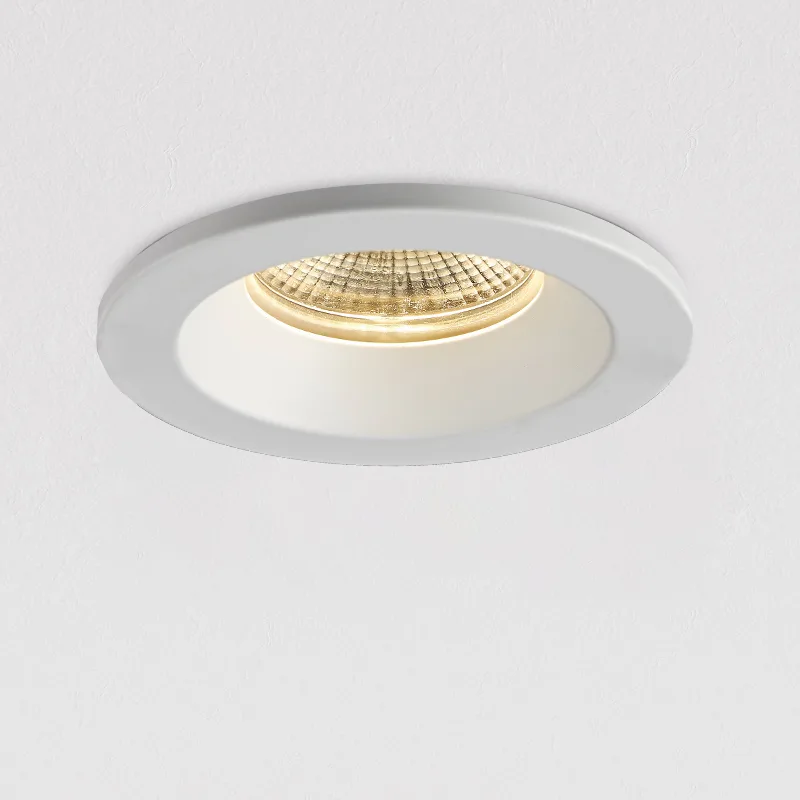
The difference between the recessed and surface mounted spotlights is their installation method. Recessed spotlights are usually installed within the ceiling, wall, or floor, and the lamp body hides in the building structure, except that only the light source part is exposed to the outside. For people who like the simple style, recessed spotlights are a good choice.
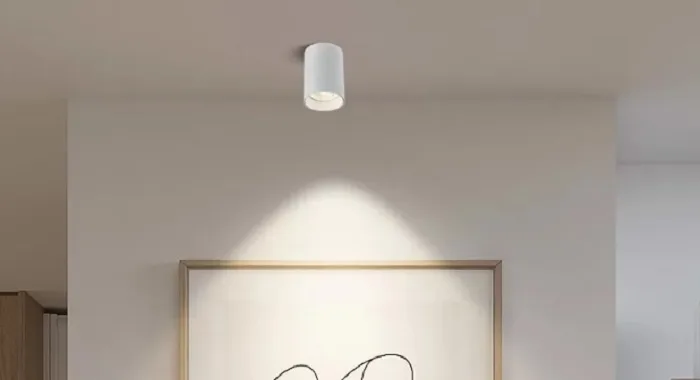
A surface mounted spotlight refers to a light device installed on a building surface. Unlike a recessed lamp, the whole of its lamp body is totally exposed, and usually the holder and lamp can be seen. This type of lamp does not need to be inlaid into the wall or ceiling, therefore, the process of installation is pretty convenient, especially for those places that have already been decorated. It is also easier to maintain because the fixtures are exposed.
Indoor vs. Outdoor Spotlights
Indoor spotlights are a type of lamp used for indoor lighting, usually used for accent lighting in homes or commercial places, such as living rooms, restaurants, galleries, shops, etc. Indoor spotlights focus on the softness and design of light to match the interior decoration style and add atmosphere to the space.
In contrast, outdoor spotlights are used primarily outdoors. They are designed more robust and durable to handle all harsh outdoor conditions like strong winds, rain, dust, and very high or extremely low temperatures. Usually, outdoor spotlights have good waterproofing and dustproof properties to ensure that they can still work normally after using them for a long time outdoors.
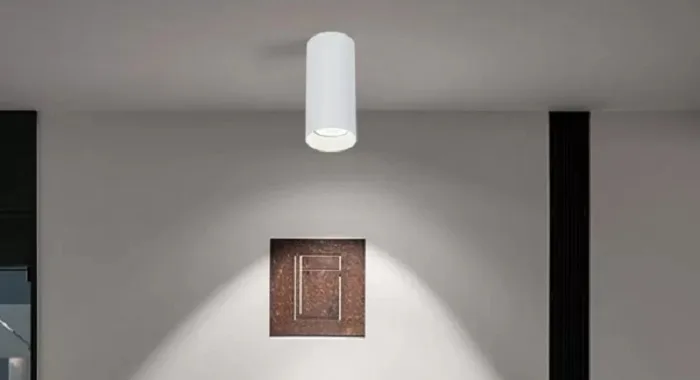
One of the very popular applications of spotlights is accent lighting. This kind of lighting is basically for emphasizing something, like certain objects or areas, to create visual points of focus. Be it an exhibition of art, a display of merchandise in stores, or decoration of a house, LED spotlights can always effectively guide the line of sight.
Another important use is task lighting. Spotlights are very useful in some working areas where the detailed work is to be carried out with proper focus, such as the kitchen. They can directly illuminate the cooking area in the kitchen, providing users with a clear view.
Spotlights are also widely used in outdoor lighting. Their powerful light output and directional illumination capabilities make them an ideal lighting solution for building facades, courtyards, and public areas. Besides just guaranteeing safety in the dark, outdoor spotlights add an aesthetic appeal to the landscapes. Quite a lot of urban landscapes use spotlights to illuminate parks, sculptures, or fountains, turning them into noticeable visual focal points at night.
There are several factors to consider when choosing the best spotlight, including purpose and placement, beam angle, brightness and lumens, color temperature, energy efficiency, and style and design. Let’s go through them one by one.
The first thing to consider when choosing a spotlight is the purpose and where it is being installed. There are spotlights for ambient lighting, accent lighting, or task lighting, each serving its own emphasis. For instance, accent lighting can be used to light up particular things or areas while ambient lighting provides an overall lighting effect. Therefore, you need to choose the right spotlight according to your purpose.
In choosing the spotlights, their location is equally critical. Because different locations require the installation height, angle, and direction of the spotlight to differ, you need to specify the installation location of the spotlight to be able to ensure that the light will be in a position to cover the target area effectively.
The beam angle is also one of the important factors of the spotlight, which can affect it in a big way. According to different needs, the beam angle of the spotlight can be divided into wide beam angle and narrow beam angle.
If you need to illuminate a large area, then you can choose a spotlight with a wide beam angle to ensure a wider light coverage. And for focusing on something or any particular area, it’s better to have a spotlight with a narrow beam angle. Please choose the right beam angle based on your desired lighting effect.
Another important factor affecting the lighting effect of spotlights is brightness and lumens. Generally speaking, the higher the lumen value, the brighter the luminaire. When choosing any spotlight, you need to select the appropriate lumen value based on the size of the space and your lighting needs.
But no single luminaire can solve all the lighting requirements, which is why in most cases several spotlights working together are needed. Then you may be wondering: How many spotlights do I need? The number of spotlights depends not only on the brightness of the individual lamps, but also on the size of the room, the height of the ceiling, the use of the lighting, and even the layout of the space. These all affect the number of spotlights.
Generally, large rooms like living rooms or open-plan offices need more than one spotlight to spread the light around the room and achieve even lighting. In small rooms or areas that require concentrated lighting, fewer spotlights can create this desirable effect.
Why need to consider color temperature? It plays a vital role because it directly influences the effects of lighting and the atmosphere of space. Color temperature is normally expressed in Kelvin (K), which indicates the color of the light emitted. The choice of color temperature for a space must take into account the functional needs of the user and the desired atmosphere.
According to the color temperature of the spotlight, it could be divided into warm white and cold white. Warm white light would give people a warm and comfortable feeling, suitable for the living room, bedroom, and other places people need to rest in. Cold white light is bright and clear, suitable for the office, kitchen, and some other places where there is a demand to improve attention and work efficiency.
With increasing awareness about energy conservation, the energy efficiency of spotlights has also been an important consideration when choosing. The advancement of modern lighting technology makes much more efficient light sources possible compared with traditional lamps. Especially within the home and business environment, the need to use lighting equipment for long periods of time makes it particularly important to choose energy-efficient lights.
LED spotlights have some crucial advantages over traditional lighting using halogen lamps. Firstly, LED lamps use electricity more efficiently, and for the same or even higher light yield, they use noticeably less electricity. Secondly, the service life is longer than that of traditional halogen lamps by tens of thousands of hours. This saves the user from having to change lamps quite often, hence reducing maintenance costs.
When it comes to selecting spotlights, consider the benefits accruing from energy-efficient lighting that will help in saving costs and contribute positively to environmental protection. By reducing the amount of energy used, LED spotlights reduce the greenhouse gas emissions produced during the generation of electricity, hence reducing negativity to the environment.
Finally, the style and design of the spotlight are also important factors in choosing. The design of spotlights is varied, such as Toseo’s spotlights, which range from modern simplicity to traditional classic styles to meet the needs of users in different scenarios.
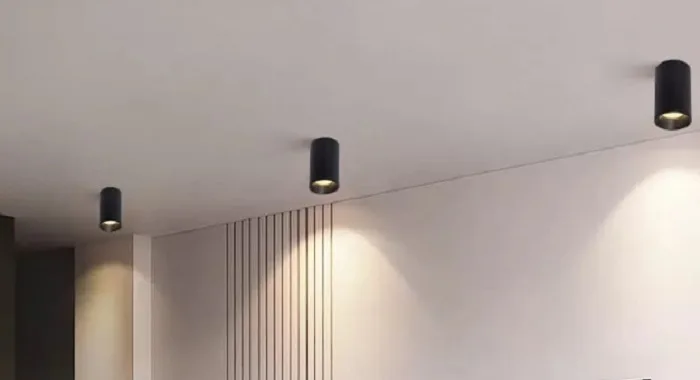
The selected spotlights should also be in line with the decoration style so that they could be better integrated into space design. Besides, they can help to enhance the beauty of mutual visual effects. For example, in a simple modern style living room, choosing spotlights with simple lines and smooth appearance can make the space appear cleaner and brighter.
If you want a spotlight to work stably and efficiently for a long time, then correct installation is critical. Below we will introduce a step-by-step guide to installing a spotlight and how much it will cost by taking surface mounted spotlights as an example.
Installing a surface mounted spotlight is not difficult, though each step needs attention to detail so that the lamp can be installed firmly and safely. The following are the steps one by one:
First, do the preparation work before installation. The following materials and tools needed for implementation are prepared in advance: spotlight kits, electric drills and drill bits, screwdrivers, electric testers, wire connectors, mounting screws, etc. Before starting the installation, be sure to turn off the power to ensure safety.
The second step is to decide on the location where the spotlight will be set. Confirm the installation location of the lamp according to the function of the space and the functional and decorative needs of the space, and then mark it.
After determining the location, use an electric drill to drill holes at the marked positions, making sure that the location of the holes matches the mounting base of the lamp. Align the spotlight base with the drilled holes and secure it to the ceiling or wall with screws. The more firmly the base is fixed, the more stable the lamp will be.
Next is the wire connection, which is the core of the spotlight installation. The spotlight wires will be connected with power wires, either on the ceiling or inside the wall by hooking up the live wire, neutral wire, and ground wire. Use wire connectors to connect these wires correctly, after that, wrap those exposed wire parts with electrical tape to avoid a short circuit or poor contact.
After connecting the wires, install the spotlight body to the fixed base, making sure the screws or buckles of the lamp are firmly connected. If necessary, adjust the angle of the lamp to make sure the beam can light up the ideal position. Please follow the manual of lamps during the installation.
After installation is complete, turn the power back on and check if the light is working. Turn on the switch and observe the direction and brightness of the spotlight beam to verify that it is producing the expected effect. If the lamp is adjustable in angle, you can fine-tune the lamp head until you achieve the best lighting result.
People are often worried about the cost associated with installing a spotlight. Numerous factors determine the overall cost of installing a spotlight, including the price of the lamp, the materials and tools required, and labor costs.
Spotlights can be as low as a couple of dollars to extremely expensive, depending on the brand, design, material, and type of light source such as LED or halogen. Regular LED spotlights are relatively cheap, while high-end designs or smart features may cost more.
Some basic tools should be prepared if you install them yourself. If you happen to have those tools previously, the material cost will then be relatively low, otherwise, it costs some money to buy those tools. If you employ a professional electrician, the labor cost is another major cost.
If your circuit already has a light interface that is kept reserved, then the cost of installation will be relatively lower. If the circuit needs to be modified, you may need to pay some additional fees.

Besides proper installation, regular maintenance and troubleshooting are also very crucial to make spotlights work efficiently and last longer. Knowing how to correctly maintain the spotlight, common problems and solutions, and when to replace or upgrade the lamp will extend the life of the lamp and maintain optimized lighting effects.
For the light to be bright, regular cleaning of the spotlight is necessary. It is very easy to have dust and dirt build up on the surface of the spotlight. It will not only affect the effectiveness of the light but may also overheat the lamp and shorten its service life.
It is advised to wipe the surface of the lamp every few months with a soft dry or slightly damp cloth in order to maintain the best lighting effect. Strong acid or alkaline cleaners must not be used in order not to damage the material or coating on the lamp.
Moreover, in addition to regular cleaning, you should also regularly check other parts of the spotlight. Regularly checking the state of the bulb for whether it is old or damaged is very important. Once you find the brightness of a bulb low or flashing, you should replace it in time. It also needs to check that the power cord and plug are firm and complete to avoid poor contact and current problems.
When using spotlights, sometimes you will encounter problems with flickering or dimming lights. Flickering usually arises due to unstable power or poor contact with the bulb. In this case, you can check the power cord and connector first for any damaged parts or loose pieces. Anything found damaged should be immediately repaired or replaced to avoid further failure of the relevant part.
If the light is dimming, that may also mean it’s about to fail or become old enough to be replaced. Besides the bulb, you also need to check if there is any problem with the dimmer or switch. If after checking all that the problem still does not improve, the next thing you do is ask a professional electrician to diagnose and repair it.
Replacing or upgrading a spotlight mainly depends on two key things: the performance of the spotlight and your usage needs. If you feel that it’s one problem upon another with the light, brightness is reduced, or cannot meet your lighting requirements, then you need to replace it.
Older lamps may not be bright enough to affect the usage of a space. This might be the very best reason for replacing them with more efficient LED spotlights, which will drastically cut down energy consumption and at the same time increase the light output to light up the space accordingly.
Moreover, new version spotlights are usually also upgraded in terms of design and functions, they can have intelligent control and dimming functions, which can better meet your lighting needs.
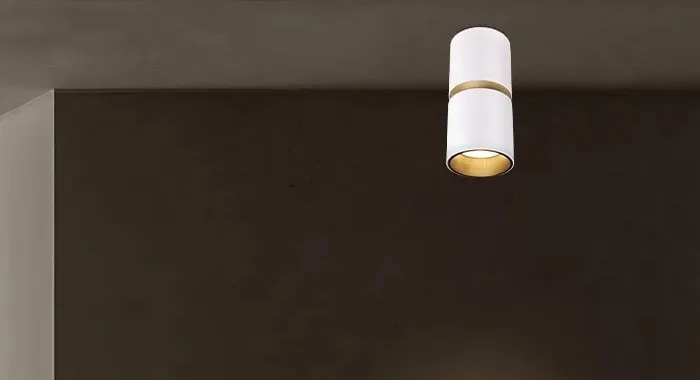
By considering factors such as the spotlight’s purpose and location, beam angle, brightness and lumen, color temperature, energy efficiency, and style and design, you can choose the best spotlight to meet your lighting needs.
Besides choosing the right spotlights, their installation also plays a very important role. You can install it yourself or have it installed by a professional and carefully follow the installation instructions provided by the manufacturer so that the light fixture is installed correctly and optimally. After installation, don’t forget to turn the light on to check whether it works properly. Meanwhile, you can check the lighting effect to see if it meets the expected requirements.
In addition to that, regular maintenance is also an indispensable part of extending the life of the spotlights. You can ensure that the spotlight remains in good and stable operation for a long time by some basic maintenance, including cleaning up the lamp surface, checking the bulb, and checking whether the wire connects well or not. If you find any problem in this process, handle it promptly.
Toseo’s spotlights are known for their quality design and superior performance, suitable for a variety of home and business environments. Choose Toseo to experience superior lighting effects!
INQUIRY