

Products
LED downlights—also known as recessed lights or pot lights—have become a top choice for modern interiors, offering a clean aesthetic, excellent energy efficiency, and versatile lighting options. However, many homeowners and contractors make common mistakes when purchasing LED downlights, resulting in poor lighting effects, premature failures, or wasted investment. This guide will help you identify and avoid these pitfalls so you can select the ideal LED downlights for your space.
One of the most frequent mistakes is neglecting the IP (Ingress Protection) rating. This rating indicates how resistant a fixture is to dust and moisture. For example, LED downlights with an IP20 rating are suitable for dry indoor areas, while those rated IP44 or IP65 are better for bathrooms, kitchens, or outdoor soffits.
Using a low-rated fixture in a damp or dusty environment can lead to early failure or even safety hazards. Always check the IP rating before purchasing to ensure the downlight matches its intended environment.
Many buyers focus solely on brightness or wattage and forget about visual comfort. Without proper anti-glare design, LED downlights can cause discomfort, reflections, and eye strain—especially in living areas or hospitality spaces.
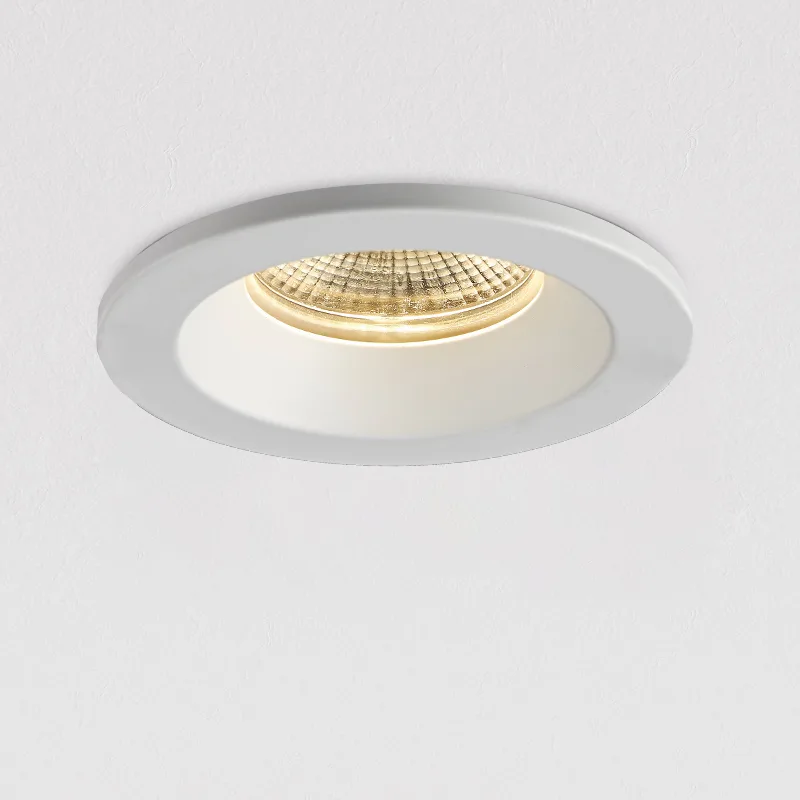
Anti-glare designs, such as deep reflectors, honeycomb louvers, or baffles, diffuse light and reduce direct glare, creating a softer and more relaxing atmosphere. When choosing downlights for bedrooms, lounges, or offices, always prioritize anti-glare features for a more comfortable lighting experience.
A common oversight is purchasing non-dimmable or fixed-angle LED downlights. Without dimming capability, you lose control over brightness levels and room ambiance. Dimmable downlights allow you to adjust lighting intensity to suit different times of day or activities, enhancing both mood and energy efficiency.
Similarly, angle-adjustable downlights provide flexibility in directing light exactly where you need it—ideal for attracting attention to artwork, countertops, or architectural features. Choosing dimmable and adjustable models ensures both functionality and design flexibility.
Many people assume higher wattage means brighter light, but this is outdated thinking. In LED lighting, lumens—not watts—measure brightness. Two 10-watt downlights can produce very different light outputs depending on design and efficiency.
When comparing options, look at lumens per watt (lm/W). The higher the value, the more efficient the light. Aim for at least 80–100 lm/W. You should also consider color rendering (CRI) and color temperature to achieve the right visual tone and color accuracy for your environment.
Recessed LED downlights are installed within the ceiling cavity, but not all fixtures fit every type of ceiling. Some are too deep for shallow spaces, while others have incompatible trim or cut-out sizes. Choosing the wrong fixture can result in a difficult installation or an uneven appearance.
Before buying, measure the ceiling depth, check the insulation clearance, and confirm the required cut-out diameter. A compatible fit ensures both a clean finish and proper heat dissipation.
In certain buildings—especially multi-story homes or commercial spaces—fire-rated downlights are required by safety codes to maintain the ceiling’s fire resistance. Using a non-fire-rated product in such areas can compromise safety and violate regulations.
Always confirm whether your project requires fire-rated fixtures. Even when not mandatory, choosing them provides added peace of mind and enhanced protection.
It’s easy to be tempted by low-cost LED downlights, but products without proper certification or warranty often lead to disappointment. Certified lights (such as CE, RoHS, or UL marked) meet safety and performance standards. Without these guarantees, you risk buying products with inconsistent brightness or poor longevity.
A reliable manufacturer will offer clear certifications, a solid 3–5-year warranty, and responsive after-sales support. This ensures product reliability and easier maintenance over time.
Choosing LED downlights is not only picking a style or wattage—it’s about finding the right balance between design, performance, and safety. By avoiding these common mistakes—such as ignoring IP ratings, overlooking anti-glare features, forgetting dimmability, focusing only on wattage, mismatching ceiling compatibility, skipping fire-rated options, and neglecting warranty—you can create lighting that is both beautiful and durable.
When thoughtfully selected, high-quality LED downlights will enhance your space with energy-efficient, comfortable, and long-lasting illumination for years to come.
INQUIRY